PHYSICS

BETRATRON NUCLEAR FISSION
Learn about the betatron particle accelerator and the process of nuclear fission...
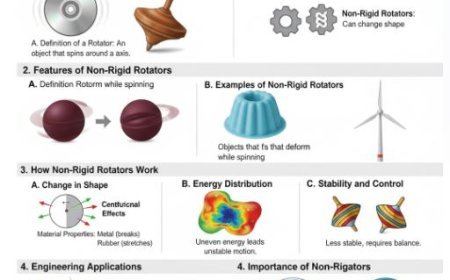
NON-RIGID ROTATOR
Learn what non-rigid rotators are in physics, how they differ from rigid rotator...

LINEAR AND SYMMETRIC TOP MOLECULES
Learn about linear and symmetric top molecules, their structure, characteristics...

Analysis of Infrared Techniques
Learn how infrared techniques such as spectroscopy, thermal imaging, lasers, and...

Linear, Symmetric Top, and Asymmetric Top Molecules
Learn about linear, symmetric top, and asymmetric top molecular structures and h...

Effect of Isotropic Substitution
Isotropic substitution refers to replacing part of a system with a material whos...

ROTATIONAL SPECTRA OF DIATOMIC MOLECULES
Rotational spectra of diatomic molecules arise from transitions between quantize...
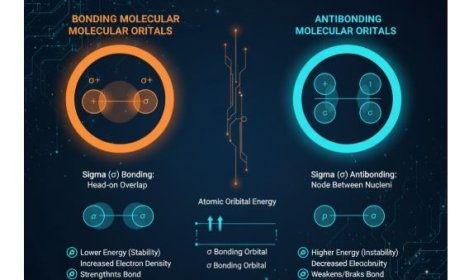
BONDING AND ANTIBONDING MOS
Discover how molecular orbital theory explains bonding and antibonding orbitals....

Heitler-London and Molecular Orbital Theories of Hydrog...
Explore how hydrogen molecules form through Heitler–London and Molecular Orbital...

Born-Oppenheimer Approximation
The Born–Oppenheimer Approximation simplifies molecular quantum mechanics by sep...

THE STARK EFFECT
The Stark Effect describes how external electric fields shift or split atomic an...


Zeeman Effect and Paschen Back Effect
The Zeeman and Paschen-Back effects describe how magnetic fields split atomic sp...


Alkali Type Spectra and Equivalent Electrons in Physics
Alkali-type spectra arise from atoms with a single outer electron—like Li, Na, a...
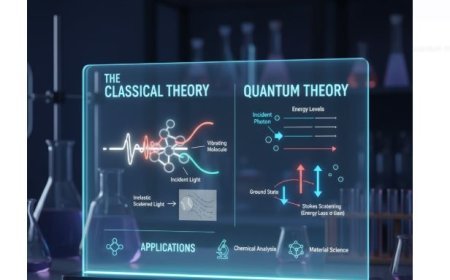
The Raman Effect: Classical and Quantum Theories
Explore the Raman Effect—an inelastic light-scattering phenomenon discovered by ...